 Maroc Générations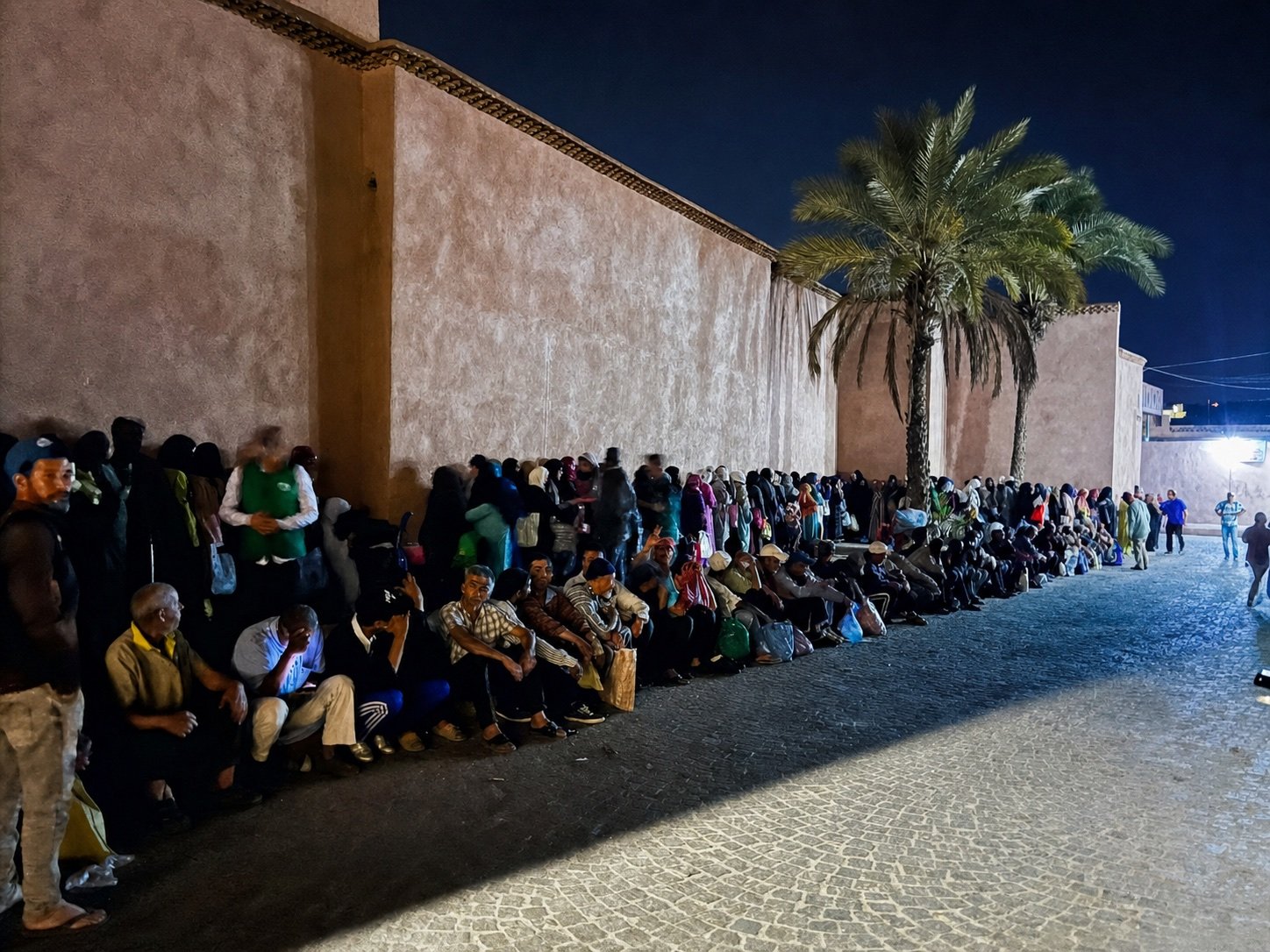
Every evening during Ramadan, a quiet queue forms along the walls of Marrakech's old medina. Families, day labourers, and elderly residents wait for the evening meal that breaks their fast. Since 2009, Ramadan charity in Marrakech has run through the kitchens of Dar Sadaqa — and this article explains how that operation works, what it costs, and how a single donation turns into meals on the ground.
Maroc Générations is a volunteer-run Moroccan association based in Marrakech. Across fifteen years, its programmes have served more than 2,000,000 meals to families in need. Ramadan is the busiest season of that work.
What Iftar Saim Provides Each Night
Iftar Saim — literally "the fasting person's iftar" — is the association's flagship Ramadan programme. Each evening, volunteers prepare and distribute the meal that breaks the fast to roughly 2,000 people in the old medina.
A typical evening ration includes:
- Dates to break the fast, following tradition
- Fresh bread
- Milk
- Eggs
The food supplies for a single day of Iftar Saim cost around 10,750 MAD. Across the whole month, covering food and logistics, the full operation runs to roughly 346,800 MAD. Every figure here is drawn from the association's own operating records, not estimates.
Dar Sadaqa: The Kitchen Behind the Work
None of this happens without a kitchen. Dar Sadaqa — "the house of charity" — is the base from which meals are cooked and distributed. Outside Ramadan it remains a place of shelter and daily feeding for travellers, the poor, and those with nowhere else to turn.
The house was founded in the spirit of a simple principle, quoted from its founder, Hajj Ahmed ben El Ghali Talibi Hassani:
"Existence is made useful through generosity."
On Fridays year-round, volunteers cook 100 kg of couscous and 50 chickens for distribution to more than 2,000 families each month.
Special Nights: Laylat al-Qadr
Ramadan builds toward Laylat al-Qadr, the Night of Decree. On that night, Maroc Générations serves a celebratory meal — chicken, bread, and fruit — to 2,000 people. It is one of the most significant single distributions of the year, costing around 49,400 MAD, prepared entirely in the Dar Sadaqa kitchens.
How Your Donation Becomes Meals
Because the association publishes its per-operation costs, giving is transparent. Based on an average cost of roughly 5.40 MAD per meal, a recurring monthly gift translates directly into meals served:
| Monthly gift | Approx. meals per month |
|---|---|
| 100 MAD | ~18 meals |
| 200 MAD | ~37 meals |
| 500 MAD | ~93 meals |
| 1,000 MAD | ~186 meals |
One-time gifts can fund a specific operation outright — a week of Friday couscous (9,300 MAD), a full day of Iftar Saim (11,560 MAD), or the Laylat al-Qadr meal (49,400 MAD).
Frequently Asked Questions
What is Iftar Saim?
Iftar Saim is Maroc Générations' Ramadan programme that distributes the evening fast-breaking meal — dates, bread, milk, and eggs — to about 2,000 people each night in Marrakech's old medina.
How much does it cost to feed someone during Ramadan?
The food supplies for one day of Iftar Saim cost roughly 10,750 MAD to feed about 2,000 people — approximately 5.40 MAD per meal.
Can I give my Zakat to Maroc Générations?
Yes. The association accepts Zakat and Sadaqa and directs it to the programme you select. It does not issue religious rulings, so for calculating your Zakat you should consult a trusted scholar.
Is my donation tax-deductible?
Maroc Générations is a Moroccan association, not a US 501(c)(3), so US tax-deductibility does not apply. A receipt can be requested through the contact page.